There’s a moment many people struggling with addiction or mental health reach where hope feels completely gone.
It’s the moment where you think:
“I’ve already tried everything.”
“Nothing works for me.”
“Maybe this is just who I am.”
“I’m too far gone to get better.”
If you are in that place right now, I want you to hear something clearly:
Feeling stuck is not the same thing as being stuck.
The truth is that many people who eventually recover have a chapter in their story where they believed recovery was impossible.
You are not broken beyond repair.
You are not a lost cause.
And you are not alone.
But there are reasons why people get stuck—and understanding them can change everything.
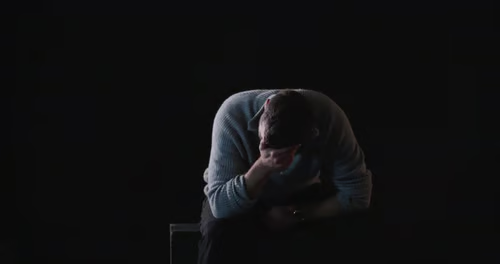
Many people believe they aren’t getting better because they “lack willpower.” That belief alone keeps thousands of people trapped in shame and silence.
But the real reasons people struggle are much more complex.
Addiction and mental health challenges thrive in isolation. When you’re fighting something this powerful alone, it can feel impossible.
Recovery was never meant to be a solo mission.
Not all help looks the same.
Some people need therapy.
Some need structured treatment.
Some need recovery community.
Some need coaching and accountability.
Many people quit too early simply because they haven’t found the right path yet.
When you’re in survival mode, researching treatment centers, therapists, programs, and recovery options can feel impossible.
The system can be confusing, expensive, and overwhelming.
That’s where support and guidance become life-changing.
Recovery rarely happens in a straight line.
There are setbacks.
There are bad days.
There are moments where hope feels completely gone.
But here’s what most people don’t realize:
The moment you feel the most hopeless is often the moment before things begin to change.
Why?
Because that moment usually means you’re ready for something different.

You don’t have to jump straight into a 30-day program if that’s not the right step for you.
There are many different paths toward healing.
Recovery coaching helps individuals build structure, accountability, and support in everyday life.
A coach can help you:
Navigate early recovery
Create a plan for change
Stay accountable to your goals
Break destructive patterns
Sometimes people don’t need treatment — they need guidance and someone walking beside them.
For some people, a higher level of care is necessary.
This might include:
Detox
Residential treatment
Partial hospitalization programs (PHP)
Intensive outpatient programs (IOP)
Finding the right treatment center can be overwhelming, and not every program is the right fit.
Getting guidance can help ensure you land in the right place for your needs, not just the first place available.
Not everyone requires residential treatment.
Many people benefit from:
Individual therapy
Trauma-informed care
Psychiatric support
Outpatient recovery programs
Mental health and addiction are often deeply connected. Addressing both can make recovery much more sustainable.
Connection changes everything.
Programs like recovery groups create a community of people who understand what you’re going through.
For many people, this becomes the foundation of long-term recovery.
Because healing often happens in rooms where people say:
“Me too.”
This is where many people get stuck.
They know they need help.
They want things to change.
But they don’t know where to begin.
That’s exactly why Boyce Family Recovery exists.
At Boyce Family Recovery, the goal is simple:
Help people and families stop feeling lost in the recovery process.
Instead of navigating addiction or mental health challenges alone, we help individuals and families build a clear path forward.
Services include:
One-on-one support to help individuals build structure, accountability, and forward movement in recovery.
Helping individuals and families identify appropriate treatment options and connect with trusted programs.
Addiction and mental health impact the entire family system. Families deserve support, education, and healing too.
Connecting individuals with:
12-step meetings
outpatient programs
therapists and mental health providers
recovery support networks
Because no one should have to figure this out alone.

Please read this carefully.
The way you feel today does not define your future.
There are people walking around today who once believed their life was over.
People who once believed they were too broken.
People who once believed they would never escape addiction or depression.
And today they are living lives they once thought were impossible.
Not because they were stronger.
Not because they were luckier.
But because they finally reached out for support.
You don’t need to have everything figured out.
You just need one step.
One conversation.
One resource.
One person willing to walk beside you.
If you or someone you love is struggling with addiction or mental health challenges, Boyce Family Recovery is here to help guide the path forward.
You don’t have to navigate this alone.
And no matter how stuck you feel today—
Recovery is still possible.